Unilevel vs. Matrix Compensation Plans in MLM: A 2026 Expert Comparison

In the dynamic world of multi-level marketing (MLM), understanding compensation structures is paramount for both companies and distributors. This article delves into a classic debate within the sector: the Unilevel plan versus the Matrix compensation plan. Before we break down their nuances, let’s establish a foundational understanding of MLM and the role of specialized software.
Understanding Multi-Level Marketing (MLM)
Multi-level marketing, often referred to as network marketing, is a sales and marketing strategy where independent sales representatives earn income through two primary channels: direct sales of products or services, and commissions on the sales made by individuals they recruit into the business (their downline).
Essentially, MLM creates a tiered commission structure. As a distributor builds their network by sponsoring new members, they not only benefit from their own sales efforts but also from a percentage of the sales generated by their downline. This creates multiple potential income streams, making it an attractive business model for many.
The Crucial Role of MLM Compensation Plans
MLM compensation plans are the blueprints that dictate how and when independent distributors receive their earnings. These plans are sophisticated algorithms designed to reward sales efforts and network building. Common compensation structures include Binary, Unilevel, Matrix, Hybrid, and Generational plans, each with its unique set of rules and payout mechanisms.
As networks grow and members multiply, calculating commissions and managing payouts can become incredibly complex. This is where robust MLM software becomes indispensable, streamlining operations, ensuring accurate calculations, and providing transparency for all participants.
The Unilevel MLM Plan Explained
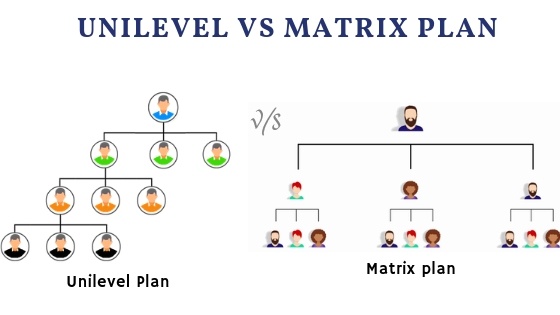
The Unilevel MLM plan stands out as one of the most straightforward and widely adopted compensation models globally. Its core principle is simplicity: a distributor can sponsor an unlimited number of individuals directly onto their frontline.
The primary advantage of the Unilevel plan is its inherent scalability. With no cap on the number of frontline distributors, theoretically, a distributor can build a vast and expansive network. Income potential directly correlates with the number of frontline recruits and their subsequent sales. Typically, commissions are paid out up to a predetermined depth, often ranging from 5 to 9 levels, although this can vary. While this limited depth can be a positive for immediate rewards, some argue it might discourage the development of extremely deep sales organizations.
The Matrix MLM Compensation Plan Explained
In contrast to the Unilevel plan’s linear structure, the Matrix MLM plan operates with defined constraints on width and depth. Think of it as a grid or a matrix, for example, a 3×7 matrix means a distributor has a maximum of 3 frontline positions, and commissions are paid up to 7 levels deep.
A key characteristic of the Matrix plan is the concept of ‘spillover.’ When a distributor’s frontline is full, any additional recruits they sponsor are placed in the next available open position within their downline. This spillover can originate from the distributor’s upline, potentially helping them build their downline even if their personal recruitment efforts are limited. This reliance on the collective effort of the team fosters a strong sense of collaboration.
Unilevel vs. Matrix: A 2026 Comparative Analysis
Let’s directly compare these two popular compensation plans:
- Potential Payouts: While both plans offer significant earning potential, the Matrix MLM plan often has the capacity for higher payouts due to its structured cascading nature and the impact of spillover. However, this can be influenced by the specific parameters (width and depth) of the matrix and the overall activity of the network.
- Ease of Implementation: The Unilevel plan is generally considered easier to implement and understand due to its simple, linear structure. The Matrix plan, with its defined width and depth and spillover mechanics, can be more complex to manage and explain initially.
- Downline Expansion: Downline expansion is typically more straightforward and boundless in a Unilevel plan due to the unlimited frontline sponsorship. In a Matrix plan, expansion is constrained by the defined width, but the concept of spillover can aid in filling these limited spots.
- Downline Structure: The Unilevel plan features a direct, one-dimensional downline structure. The Matrix plan, on the other hand, has a multi-dimensional structure, with members placed within specific slots defined by the matrix dimensions (width x depth).
- Recruitment Dynamics: In a Unilevel plan, a distributor’s direct influence on their downline recruitment is primarily through their personal efforts. In a Matrix plan, a sponsor can have a more significant indirect influence on downline recruitment through strategic placement and the potential for spillover from their upline, fostering a more interdependent recruitment environment.
- Teamwork Emphasis: The Matrix MLM plan inherently promotes teamwork and a collective effort due to the spillover mechanic and the limited number of frontline positions. While teamwork is beneficial in any MLM structure, it’s a more defining characteristic of the Matrix plan. The Unilevel plan, while also benefiting from teamwork, places a greater emphasis on individual recruitment and direct sales efforts.
Recent Developments (2026)
As of 2026, the MLM landscape continues to evolve, with technology playing an even more significant role. We’re seeing a trend towards:
- Enhanced MLM Software with AI Integration: Advanced MLM software now incorporates AI-driven analytics to predict recruitment trends, optimize commission calculations, and provide personalized training recommendations for distributors.
- Focus on Hybrid Models: While Unilevel and Matrix remain popular, many companies are opting for hybrid compensation plans that blend elements of different structures to offer more flexibility and reward various types of contributions (e.g., sales volume, recruitment, team building).
- Digital Recruitment Tools: The rise of social media and digital marketing has led to the development of sophisticated tools that integrate directly with MLM platforms, making online recruitment and customer acquisition more seamless.
- Emphasis on Distributor Education: Companies are investing more in comprehensive training programs, accessible through online portals and apps, to equip distributors with the skills needed to succeed regardless of their chosen compensation plan.
- Increased Regulatory Scrutiny: As the industry matures, there’s a continued focus on transparency and compliance. Compensation plans are being designed with clear, easily understandable payout structures to meet evolving regulatory expectations.
Conclusion
Both the Unilevel and Matrix compensation plans offer distinct advantages and disadvantages. The optimal choice for an MLM firm hinges on its product, target market, and overall business strategy. A Unilevel plan might be ideal for businesses prioritizing rapid, broad recruitment, while a Matrix plan could be better suited for fostering strong team collaboration and potentially higher individual payouts through strategic network building.
For companies looking to build or enhance their MLM operations, investing in robust, modern MLM software is no longer an option but a necessity. Exploring a free MLM Software Demo can provide invaluable insights into how these plans and management systems function in practice.